
Classical Diary 3/25
What I've Been Listening To This Week
There have been a lot of great releases this past week:
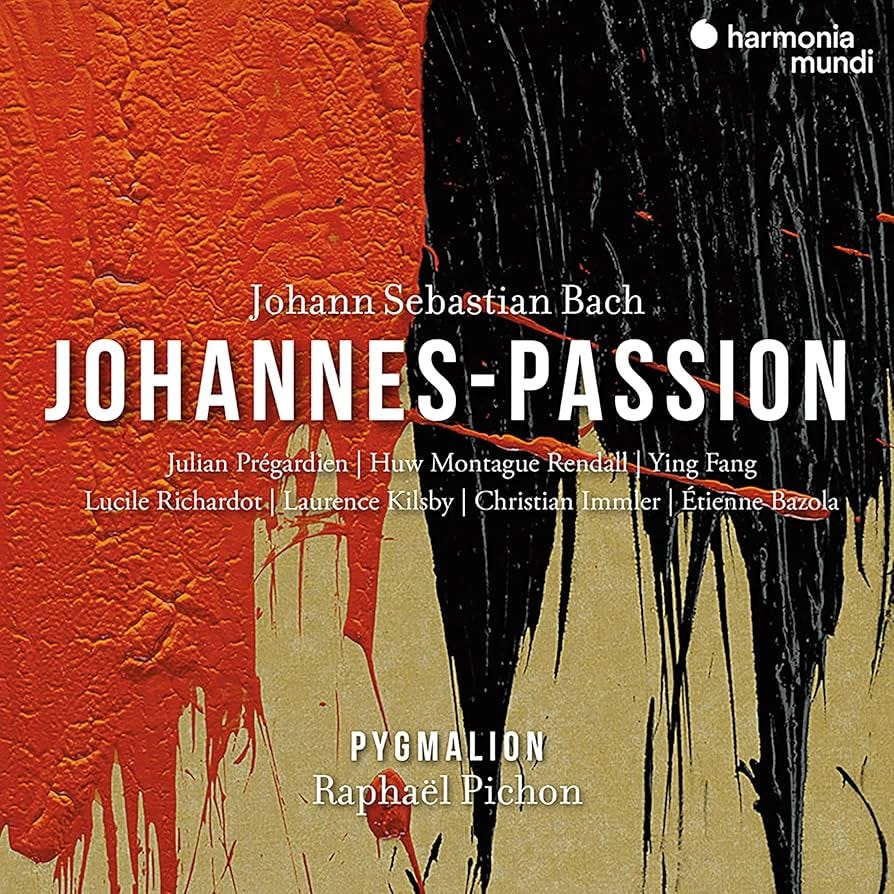
Bach never came closer to writing an opera than he did with the St John Passion. The leaner cousin of the more expansive St Matthew, it responds to incisive conducting and singers with a nose for drama, both of which this new recording possesses in spades.
Raphaël Pichon tears into the meat-grinding opening chorus with its agonised cries of desperation, later whipping his singers into a frenzy as they call for the release of Barrabas and demand that Christ be crucified. Pygmalion are razor-sharp throughout, including a vigorous engagement with the reflective chorale texts.
Of course, the St John Passion is not an opera, relying on the Evangelist to narrate the bulk of the story. Pichon is fortunate in German tenor Julien Prégardien. Experience shows, the voice rising to an outraged shriek as he declares Barrabas a murderer, achingly florid recalling Peter’s bitter tears.
Huw Montague Rendall brings tonal richness and unswerving gravitas to the role of Jesus, while Christian Immler’s agitated Pilate swings back and forth like a tormented weathervane. In a fine lineup of soloists, Ying Fang’s purity contrasts nicely with the otherworldliness of Lucile Richardot, rounding off one of the most theatrical St Johns in the catalogue.
Everything flows—nothing remains the same: “Panta Rhei: An Ontology of Becoming” is the third album by violinist and composer Francesca Guccione and will be released on March 20, 2026 on CD, vinyl, and digital formats by the label Neue Meister. It represents a natural continuation of the sonic and conceptual paths the Sicilian artist began with her second album, “The Geometry of Time.” Once again, Guccione offers a deeply personal reflection on transience and transformation, opening up new perspectives on time and change. The album evolved less as a pre-planned project and more as a musical process: from individual pieces in motion, a coherent cycle emerged—almost spontaneously—within the creative flow.
At the heart of the music lies the dynamic relationship between strings and electronics: an ongoing dialogue that turns sound into a space of continual change. Classical instruments and electronic elements merge into emotional soundscapes; rhythmic ostinatos, cycles, and timbral metamorphoses shape a ten-movement musical flow in which reality and imagination intertwine. Guccione’s music moves between neoclassical motifs, ambient textures, and subtle electronic hues. Recurring patterns and transformations serve not only as propulsion, but also invite the listener to immerse themselves in experiential sonic spaces. The artist finds it difficult to place her work within a single style and prefers to speak of “alternative classical,” because for her, music and art always inhabit profoundly personal and abstract dimensions.
The violin—at times a delicate impulse, at others a suspended sonic trace within the ensemble—remains the unifying element and defines the album’s sound. Familiar resonances and unexpected timbres are woven together with finesse. The pieces are carried by an international line-up that combines classical expertise, contemporary sound exploration, and electronic sensibility. Alongside Francesca Guccione, the performers include the BAFTA-awarded composer and violinist Bryan Senti, of Cuban-American background, the Spanish-Swiss violinist Violeta Vicci, and the Italian violinist Antonella Solimine. Guests also include cellist and principal conductor of the Tyrolean Symphony Orchestra Francesco Angelico, the Italian cellist and composer Chiara Trentin, the Berlin pianist Robert Gromotka, and the German composer and sound artist Frieder Nagel on synthesizers. Together they create a soundscape inspired by philosophy and nature.
The works gathered on the album resemble an architecture made of sound: they linger without haste and invite the listener to perceive the nuances between intimacy and expansiveness, elegance and reduction. “Panta Rhei” opens subtle passages between acoustic and electronic worlds. Identity, form, and perception appear as continuous, fluid processes; becoming and transformation are the focus, not stasis. Essential to the album’s character is the close collaboration with mixing engineer Gabriele Gambera and sound technicians Saretto Emmolo and Alessio Vanni, whose sensitivity during recording and production has shaped the depth, transparency, and expressiveness of the sound.
“Panta Rhei” floats between reality and imagination. Francesca Guccione’s musical language remains poetic—an invitation to surrender to the ongoing flow. “It is an album written for attentive listening, in which continuity and transformation coexist,” the artist states. The work remains in constant motion, making both change and permanence perceptible through subtle nuances.

There have been a couple of standout recordings of Mahler’s ‘rogue’ Seventh in recent times – none more illuminating or hard to beat than Rattle’s Bavarian RSO account – but after Paavo Järvi’s brilliant rendering of the fledgling First Symphony with his Zurich orchestra I was more than ready for this.
What I really like about Järvi’s Mahler is his acute understanding of the musical language and most especially its volatility. He’s really in sync with those dramatic volte-faces be they driven by tempo or dynamics or both. And he’s not shy of the extremes or indeed of encouraging ugly sounds. It’s all part of the Mahlerian palette, of course, but so many conductors try to clean up this music and ease us into those sometimes very awkward transitions. At that point it ceases to be Mahler.
Communicating that style to 90-plus players is the real challenge, of course, and what I like particularly about Järvi’s Mahler with the Tonhalle-Orchester is his and their idiomatic way with not just sound but phrasing – all those complex hairpin rubatos which give the music its character and for the most part are clearly indicated in the scores. The rapt middle section of the first movement – a sudden departure to remoteness, far from the madding crowd – has him shaping that beautiful theme in such a way as to make it really personal.
There is something quite atavistic about his first movement generally, an elemental coarseness about the tenor tuba and the landscape it inhabits. He doesn’t rise to the climactic processional with quite the pagan relish you find with Rattle or Bernstein – but its immediacy is still exciting.
The inner movements – two Nachtmusiks and a spooky Scherzo – are full of personality. The ripeness of the call-and-response horn solos and the impulsiveness of the dance music gives it great rusticity. The Scherzo shrieks and slides with impunity and there’s an overriding sense that the term sforzando might easily have been created here. That fffff slap-pizzicato at one point feels like the loudest note in the piece and there are bassoon farts that could hardly be ruder. The sentimentality of the second Nachtmusik is lovingly addressed with guitar and mandolin very ‘present’ in the mix.
As for the ‘gathering of the Guilds’ all-dancing finale, Rattle’s Bavarians really dig their heels in and go for broke but I like Järvi’s excitability and appreciation of the un-fancy footwork. And he doesn’t disappoint in the coda with a huge crescendo into the bell-laden final pages.
Rattle’s Bavarian cycle is proving supremely satisfying and in this piece he surely takes the palm – but Järvi has the measure of this music for sure and I am excited for the rest of the cycle.
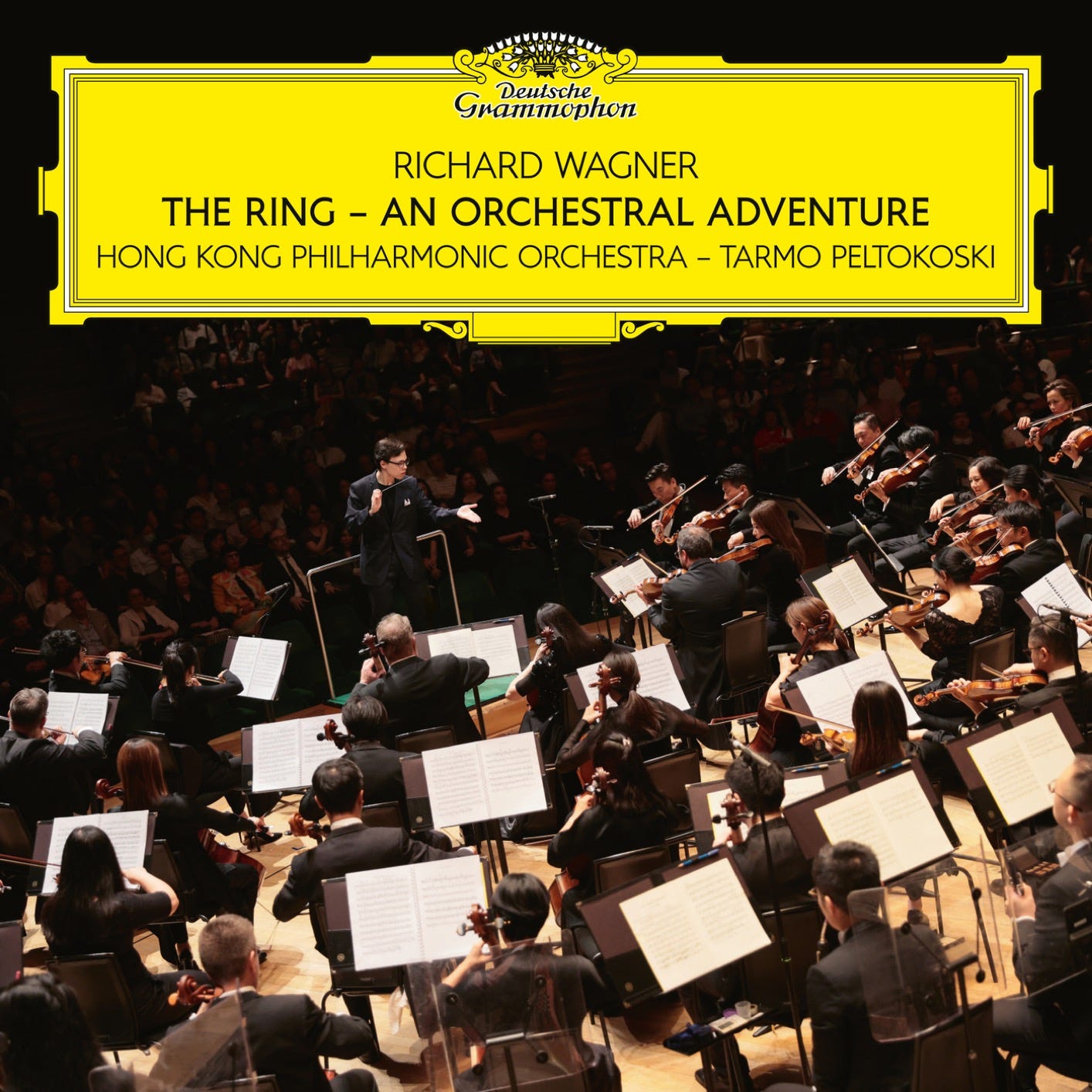
The Hong Kong Philharmonic Orchestra (HK Phil) proudly announces the release of its debut album on Deutsche Grammophon on 20 March 2026 (Friday), featuring Richard Wagner’s The Ring – An Orchestral Adventure (arranged by Henk de Vlieger), conducted by its incoming Music Director, Tarmo Peltokoski. This landmark collaboration with the world’s most historic classical label marks a new chapter in the HK Phil’s international recording profile.
“World-class Wagner…The climax arrived in Götterdämmerung, where the tragedy unfolded scene by scene toward the Funeral March, building powerful tension. Finally, the themes reappeared one by one, while the strings conveyed a sigh of remorse that moved audiences.”
-- Oliver Chou, Ta Kung Pao
Arranged by Dutch composer and percussionist Henk de Vlieger, The Ring – An Orchestral Adventure is a condensed yet thrilling symphonic journey that captures the drama and grandeur of Wagner’s monumental cycle. It was recorded live at the Hong Kong Cultural Centre Concert Hall on 28 June 2025. In 2019, HK Phil became the first orchestra in Asia to receive Gramophone Magazine’s Orchestra of the Year Award, in recognition of its recordings of Wagner’s complete Ring cycle.
The full digital album will be available on all major streaming platforms from 20 March 2026 (Friday). For more details, please visit www.deutschegrammophon.com/en/artists/tarmo-peltokoski. The vinyl album, set to release worldwide in July, will go on pre-order simultaneously through Universal Music Hong Kong’s official online store.
The live performance is also available on Deutsche Grammophon’s streaming platform STAGE+ at www.stage-plus.com.
Tarmo Peltokoski, Music Director Designate of the HK Phil, said: “I’m honoured to present the Hong Kong Philharmonic’s first album on Deutsche Grammophon, with the Ring adventure by de Vlieger who has combined the infamous bleeding chunks into a symphonic journey from the depths of the Rhine to the burning Valhalla. The orchestra is specialised in Wagner, and we are also excited to embark on the European tour in November and December playing this very piece, happy to be sharing our musicmaking also with audiences overseas.”
Bernhard Fleischer, Chief Executive of the HK Phil, said: “This marks a significant milestone for the Hong Kong Philharmonic Orchestra as we launch our debut album with Deutsche Grammophon. We are deeply grateful for the opportunity to partner with such a prestigious label, which shares our commitment to artistic excellence. As a leading orchestra in Asia, we are proud to share our passion for music with listeners worldwide and to continue elevating the profile of the HK Phil on the global stage.”
Dr Clemens Trautmann, President Deutsche Grammophon and New Business Strategy Global Classics, said: “I am thrilled that the decade-long devotion of the Hong Kong Philharmonic Orchestra to Wagner‘s Ring cycle now culminates in the release of an impressive symphonic version on Deutsche Grammophon. In the 150th anniversary year of the tetralogy, Music Director Tarmo Peltokoski leads the ensemble to a new dimension of intensity and nuance, and he showcases the strengths of the rarely performed arrangement by de Vlieger, shaping a huge arch over an hour of music in which each detail is still finely executed. It is especially exciting that global audiences can witness this breathtaking symphonic Ring adventure also audiovisually on Deutsche Grammophon’s streaming platform STAGE+ in the highest resolution and immersive quality.”
Gary Chan, Managing Director of Universal Music Hong Kong and Senior Vice President of Universal Music Greater China, said: “As a leading orchestra in the Asia-Pacific region, the Hong Kong Philharmonic Orchestra has long enjoyed international acclaim. With its Music Director Designate, the highly sought-after young maestro Tarmo Peltokoski, at the helm, I eagerly anticipate this masterfully produced album. It allows music lovers worldwide to hear the exceptional artistry of the orchestra that Hong Kong is so proud of.”